Phone
Phone  info@qualityuniforms.co.nz



A customer may interact with several people from your business before making a decision. When every team member wears different colours, garment styles or logo placements, that experience can feel disconnected. A clear uniform branding strategy solves this problem by establishing practical standards for clothing, colours, decoration and ordering. The goal is not to make every employee look identical. It is to create a recognisable team appearance while accommodating different roles, working conditions and individual fit requirements. With a structured approach, New Zealand organisations can strengthen brand visibility, simplify uniform purchasing and give employees clothing that supports a professional, confident presentation.
1. Set One Uniform Brand Standard
Begin by documenting how your brand should appear across every garment. Your uniform guide should include approved logo files, brand colours, decoration methods, placement measurements and minimum clear space around the logo. Specify whether different departments may use alternative garment colours or logo versions. These decisions should be made before items are ordered so individual managers do not create conflicting variations. Before placing your logo on uniforms, confirm that the correct artwork is being used. The Intellectual Property Office of New Zealand provides an official Trade Mark Check for businesses wanting to search for similar marks on the New Zealand register. (IPONZ)
PRO TIP: Create one digital uniform guide that can be shared with managers, procurement staff and your apparel supplier.
Explore Corporate Uniform Options
2. Build a Practical Core Garment Range
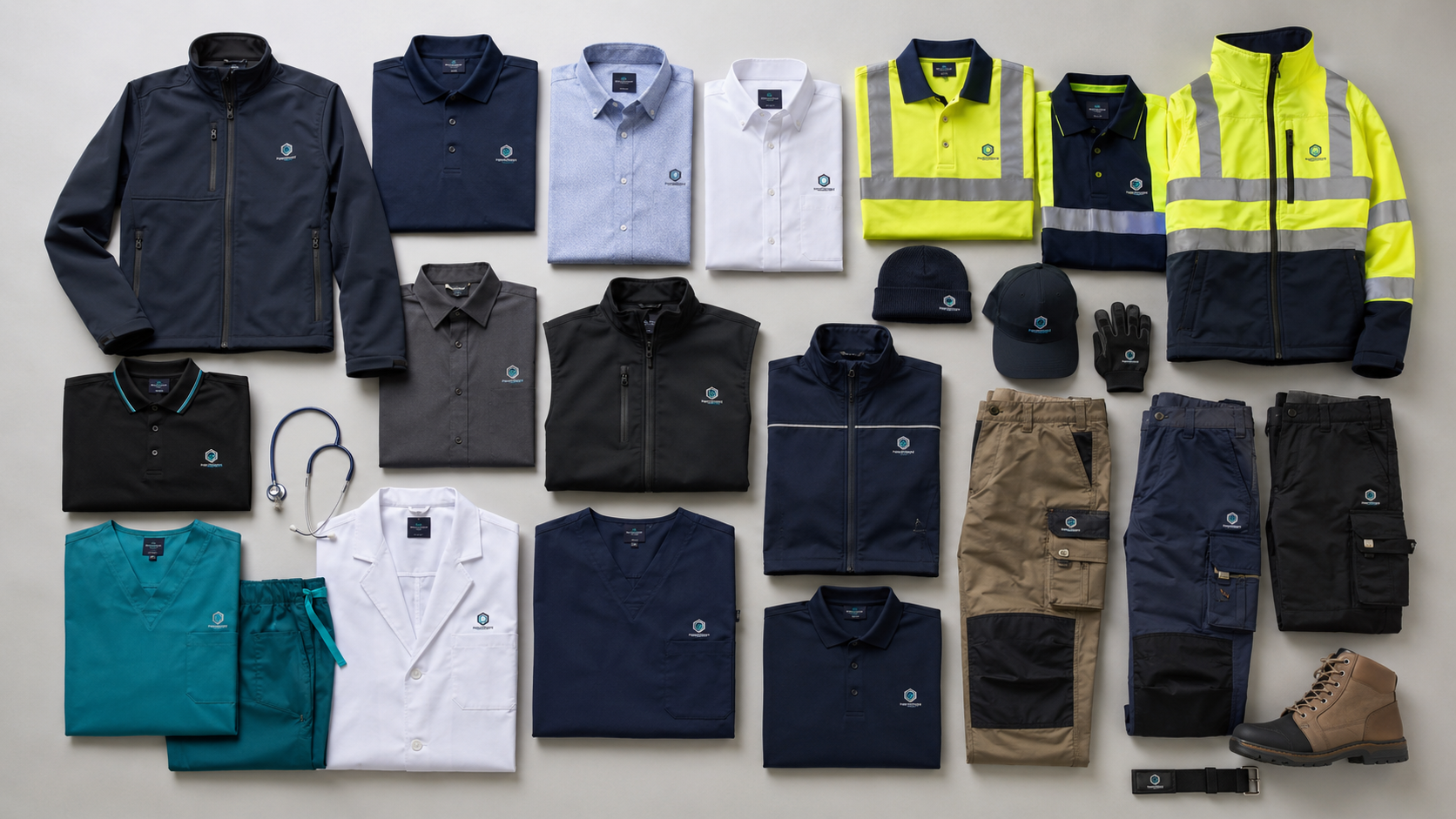
A consistent uniform programme does not require dozens of products. Start with a controlled selection of garments that covers your team’s main working environments.
A typical range could include:
- A branded polo or shirt for everyday wear
- A warm mid-layer such as a sweatshirt or softshell jacket
- An outer layer suited to New Zealand weather
- Role-specific workwear, healthcare apparel or hospitality garments
- Approved trousers, shorts or skirts where required
PRO TIP:Choose garments that can remain available over time. Replacing discontinued styles can gradually weaken consistency across the team.
3. Choose Colours with a Clear Purpose
Select one primary uniform colour that closely reflects your visual identity. Secondary colours can then be used for contrast, layering or distinguishing departments without losing the overall brand connection. Consider how each colour performs in real working conditions. A colour that looks effective in a digital brand guide may appear different on cotton, polyester, fleece or waterproof fabric. Request samples before approving a large order and review them in both indoor and outdoor light.
Where different teams require separate colours, keep another feature consistent. This could be the logo position, garment family or shared outerwear.
PRO TIP: Record the exact supplier colour name and product code rather than relying on descriptions such as “navy” or “charcoal”.
4. Standardise Logo Placement and Decoration
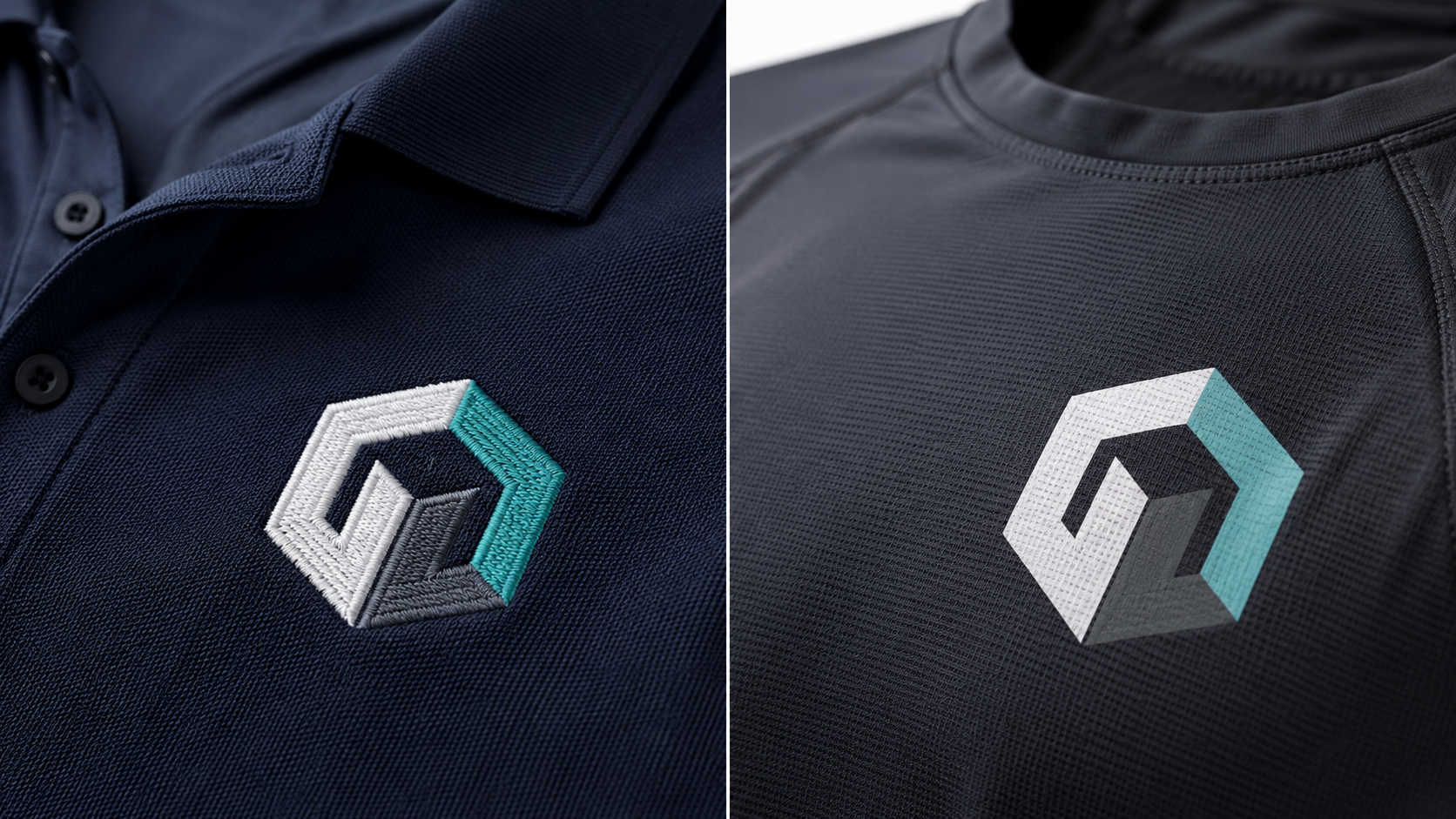
The logo should appear in a predictable position across your uniform range. Common locations include the left chest, sleeve, upper back or front of a cap. The most suitable option will depend on the garment, visibility requirements and the level of detail in the artwork. Choose between embroidery and printing according to the fabric, garment use, wash requirements, artwork detail and desired finish. Your apparel supplier should test the decoration method before full production begins.
PRO TIP: Approve a physical sample or production proof before branding the complete order.
Learn About Embroidery and Printing
5. Create Options for Different Roles and Fits
Consistency does not mean forcing every employee into the same garment. Office staff, tradespeople, healthcare workers and customer-facing teams may have very different comfort, movement and safety requirements. Maintain a coordinated appearance by selecting related garments from the same colour family. Offer suitable sizing, different cuts and practical layering options while keeping logos and core brand details consistent.
Your uniform policy should also explain who purchases, owns and cleans each item. Employment New Zealand advises employers and employees to agree on responsibility for buying and cleaning workplace clothing or whether an allowance will apply. Its official equipment, vehicles and clothing guidance provides further information. (Employment New Zealand)
PRO TIP: Involve representatives from different roles when trialling garments. Their feedback can identify fit or functionality problems before rollout.
6. Protect Safety and Functionality
Brand presentation must never compromise the purpose of protective clothing. For employees working around vehicles, machinery, weather exposure or workplace hazards, garment selection should begin with the role’s safety requirements. WorkSafe explains that personal protective equipment is used when other control measures cannot adequately eliminate or minimise risk. Its PPE guidance for businesses also states that businesses cannot pass the cost of required PPE to workers. (WorkSafe)
Keep branding clear of reflective elements, protective features and areas that could affect garment performance. Confirm logo placement and decoration with a supplier experienced in workwear, hi-vis clothing and safety apparel.
PRO TIP: Treat safety garments as a controlled part of the uniform programme rather than applying branding to unapproved products.
View Workwear and Hi-Vis Clothing
7. Manage Ordering and Replacement Centrally
A successful uniform branding strategy continues after the first order. Create an approved product list that records garment codes, colours, logo positions, decoration methods and eligible roles. Use the same process for new starters, replacements and seasonal requirements. Centralised ordering prevents departments from purchasing near-matching items that gradually dilute the team appearance. Set expectations for garment care, replacement and the return of branded clothing where appropriate. Review the range periodically to identify sizing gaps, damaged items or products that are no longer available.
PRO TIP: Keep a small stock of commonly requested sizes to support new employees without delaying their professional presentation.
Ready to Create a Consistent Look Across Your Team?
Quality Uniforms helps New Zealand businesses and organisations coordinate professional apparel across different roles, locations and working environments.