Phone
Phone  info@qualityuniforms.co.nz



The biggest mistake businesses make when ordering uniforms? Treating them like a simple branding exercise. Choosing work uniforms is not just about finding a shirt you like and placing your logo on the chest. The garments need to suit the employee’s actual duties, workplace conditions, movement, fit, laundering requirements and, where relevant, health and safety risks. They also need to be practical to reorder as your team changes. Employment New Zealand recommends documenting clothing and uniform requirements so employers and employees are clear about what is required and who is responsible for providing and maintaining workplace clothing. A successful uniform programme therefore begins with how people work and then brings your branding into that practical framework.
1. Start with the Job, Not the Catalogue
It is easy to begin by comparing colours, collars and garment styles. A better starting point is to examine what each employee actually does during a normal working day. Consider whether the role is indoors or outdoors, how much movement is involved, how often employees interact with customers, exposure to changing weather, how frequently garments need laundering, whether pockets or layers are required and whether protective clothing or PPE is needed.
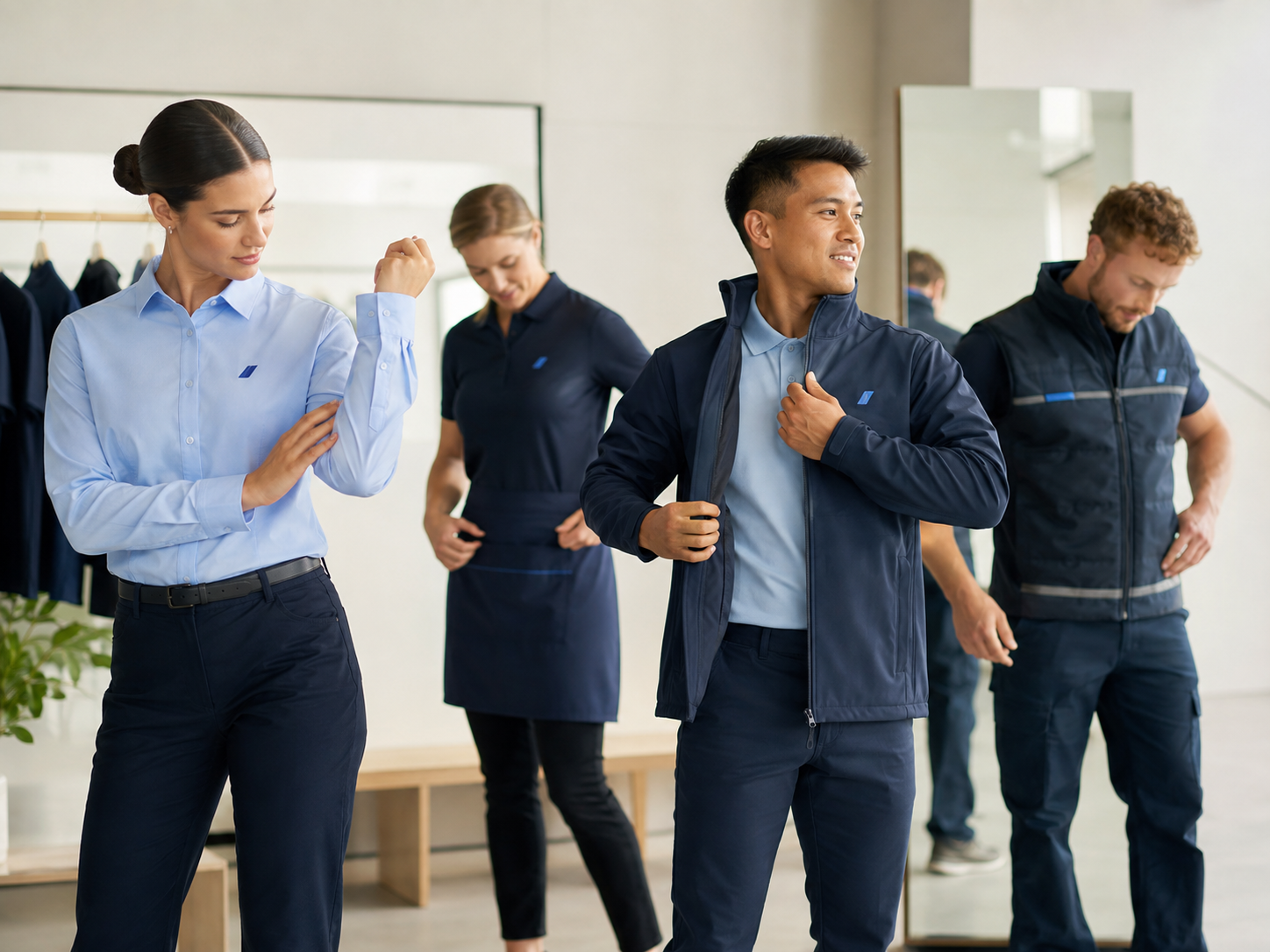
A corporate receptionist, healthcare employee, chef and construction worker may all need branded uniforms, but the garments that work for each role will be very different. For organisations with several departments, create a coordinated range rather than forcing everyone into one identical garment. Shared colours, logo treatment and garment quality can maintain brand consistency while individual products reflect different working requirements. Employment New Zealand’s equipment, vehicles and clothing guidance explains why uniform requirements and responsibilities should be documented. Explore uniform options for different industries when planning a coordinated range.
PRO TIP: Write down the practical requirements for each role before reviewing products. This makes it easier to compare garments based on suitability rather than appearance alone.
Explore Uniform Options for Different Industries
2. Put Safety Requirements Before Branding
Where clothing is being used as personal protective equipment, appearance cannot be the first consideration. WorkSafe New Zealand defines PPE as equipment or clothing used or worn to minimise risks to a person’s health and safety. PPE is intended for situations where other control measures cannot adequately eliminate or minimise the remaining risk. WorkSafe’s official PPE guidance states that PPE must:
A safe and practical selection should include:
- • Suit the work and associated risks
- • Be the appropriate size and fit
- • Be reasonably comfortable for the wearer
- • Work correctly with any other required PPE
- • Keep branding clear of reflective or functional areas
PRO TIP:Separate your general uniform selection process from your PPE assessment. A garment can look suitable for the team without necessarily being appropriate protective clothing.
3. Fit and Comfort Affect Whether a Uniform Works
A garment that looks professional on a sample model may perform very differently across an entire team. Employees can have different body shapes, sizing requirements and mobility needs. Where possible, offer coordinated fits and garment options rather than assuming that a single cut will work equally well for everyone. For protective equipment specifically, WorkSafe requires employers to consider size, fit and reasonable comfort when selecting PPE and to engage workers when making decisions about PPE or proposed changes affecting health and safety.
Practical wearer trials can reveal restricted sleeves, shirts that become untucked, jackets that are too tight over winter layers, inaccessible pockets, uncomfortable fabrics and gaps in the available size range. Uniform requirements should also be applied fairly. Employment New Zealand explains that workplace discrimination is unlawful when people are treated differently and less fairly because of protected grounds including sex, disability, religious belief, race and age.
PRO TIP: Ask several employees from each role to trial garments before approving a large order. Fit feedback can prevent expensive changes later.
4. Think About Fabric, Laundering and Daily Wear
Fabric choice influences how a uniform performs long after the first fitting. An office shirt may prioritise a polished appearance and easy care, while workwear may need durability and freedom of movement. Hospitality clothing may be washed frequently, while outdoor garments may need appropriate layering and weather protection. Assess fabric weight, breathability, stretch, drying time, washing instructions, resistance to frequent use, suitability for embroidery or printing and how the colour coordinates with other garments. Also consider how many garments employees will realistically need between washes.
PRO TIP: Test a decorated garment as well as the blank product. Embroidery, printing or heat transfer can change how the garment feels, stretches or should be cared for.
Compare Embroidery and Printing Options
5. Build Branding Around the Garment
Once you know the garment is suitable for the job, you can decide how your branding should appear. Different fabrics and garment constructions can require different branding solutions. An embroidered logo may work well on a polo or softshell jacket, while printing or heat transfer could be more practical for lightweight performance garments, large back designs or individual names and numbers. Consider logo dimensions, placement, fabric texture, logo complexity, garment colour, decoration colours, visibility while the employee is working and whether another garment will cover the branding.
A consistent uniform programme does not necessarily use the same decoration method everywhere. The objective is for the final garments to feel like parts of the same brand system. For example, corporate employees could wear embroidered polos while an event crew wears printed T-shirts. Matching logo artwork, colours and placement principles can connect the two groups. Employment New Zealand’s official workplace discrimination guidance also outlines the importance of applying workplace requirements fairly.
PRO TIP: Approve a physical embroidery or print sample before full production and record the final size, position and colour specifications for repeat orders.
6. Decide How the Uniform Programme Will Be Managed
Selecting the garments is only one part of choosing work uniforms. Businesses also need a practical process for issuing, maintaining, replacing and reordering them. Your programme should clarify which garments each role receives, how many items are issued, who orders and cleans them, how employees request another size, when worn garments are replaced, how new starters receive uniforms and whether company-owned garments must be returned. Employment New Zealand says these requirements should be documented in a workplace policy or otherwise recorded in writing. Its official workplace policy guidance recommends clear written policies that establish consistent expectations.
For required PPE, WorkSafe’s guidance for businesses states that a business cannot pass the cost to workers and must ensure PPE is maintained, repaired and replaced. Keep one approved process for issuing, maintaining, replacing and reordering garments so employees and managers always know what is required.
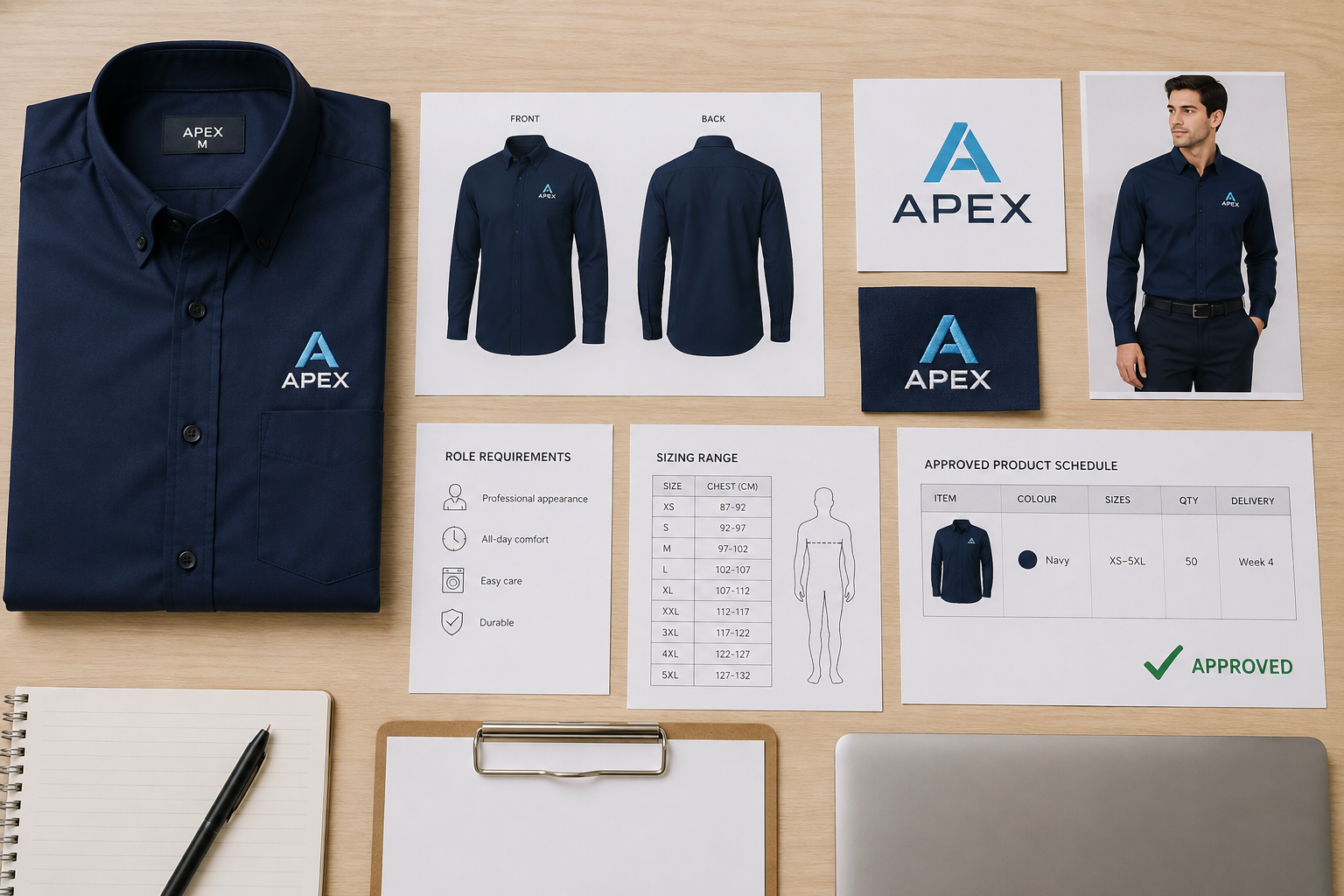
PRO TIP: Keep one approved uniform schedule containing garment codes, colours, branding details and allocations for each role.
View Hi-Vis Clothing and Safety Apparel
7. Consider the Whole Life of the Uniform
The initial order is only the beginning. Employees join and leave, garments wear out, sizes change and products can eventually become unavailable. A practical programme should account for initial fittings, new-starter orders, replacement garments, seasonal layers, additional sizes, branding consistency and product substitutions. Choosing widely usable core garments can make future orders easier and reduce the risk of branches or managers purchasing items that are close to but not quite the same as the approved range. Employment New Zealand recommends regularly reviewing workplace policies so they remain accurate and fit for purpose. The same disciplined approach can be applied to your approved uniform schedule.
PRO TIP: Keep a physical sample or photographs of every approved garment. They provide a useful reference when comparing replacement products.
Choose Uniforms Around Your People, Work and Brand
Quality Uniforms helps New Zealand organisations move beyond simply choosing a garment and adding a logo to create coordinated uniform solutions for different roles and working environments.